Quantum-Proof or Market Hype: What NEAR's 2.13 Upgrade Really Signals
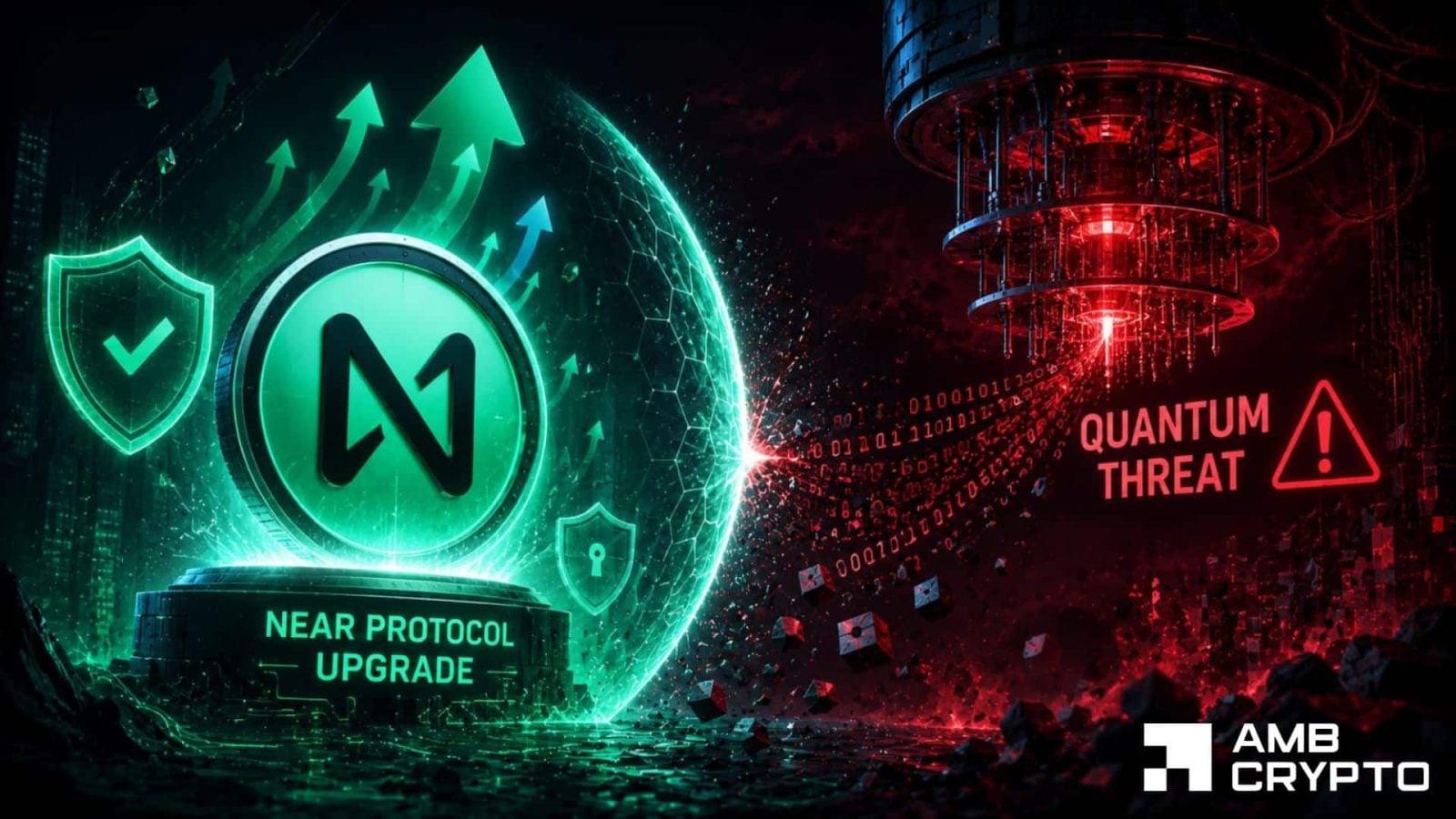
NEAR Protocol's upgrade 2.13 brings NIST-approved post-quantum cryptography and dynamic resharding to testnet — a move with implications far deeper than the 5.4% price surge it triggered. Here's why the technical shift matters for the market's long-term outlook.
The broader blockchain industry has been on notice since March, when Google issued a stark warning: future quantum computers could undermine the cryptographic foundations that secure networks like Bitcoin. That warning was not a distant hypothetical — it was a call to action. And while most protocols have been slow to respond, NEAR Protocol has moved decisively, deploying upgrade 2.13 to testnet with two structural changes that deserve scrutiny far beyond the 5.4% price tick that followed.
The first and most consequential change is the introduction of post-quantum-safe access keys. Specifically, NEAR has implemented the FIPS-204 signing scheme — a standard formally approved by the U.S. National Institute of Standards and Technology (NIST). This is not an experimental patch or a proprietary solution. NIST approval carries significant weight: it signals that the cryptographic method has survived rigorous peer review and is considered robust enough to withstand quantum-level attacks. For a Layer-1 protocol competing for institutional adoption, this is a meaningful differentiator. NEAR is also partnering with Ledger to align hardware security infrastructure with the quantum era, ensuring the protection extends to the wallet layer — where most users are actually vulnerable.
The second component, dynamic resharding, addresses a different but equally important challenge: scalability under demand. The mechanism allows the protocol to automatically split shards as state grows, eliminating the need for manual upgrades to handle network congestion. In practical terms, this means NEAR can theoretically scale with adoption without the governance friction that has plagued other chains during periods of high activity. Together, these two upgrades position NEAR not merely as a reactive protocol, but as one building infrastructure for long-term institutional viability.
Markets responded with predictable enthusiasm, though the signal-to-noise ratio warrants caution. On July 1st, spot buy volume reached 16.8 million against sell volume of 16.5 million — a positive delta of 200,000 that marked the first buyer dominance in five sessions. The following day, the positive delta expanded to 500,000, suggesting sustained rather than one-day demand. On the derivatives side, data from CoinGlass showed a 19% jump in derivatives volume to $475 million, alongside a 7.5% rise in Open Interest to $409 million. When both OI and volume rise simultaneously, it typically indicates new capital entering positions rather than existing holders rotating — a bullish structural signal.
From a technical standpoint, NEAR found support at $1.70 after a period of decline, reversed course, and climbed to $1.92, trading at $1.91 at the time of writing. The Daily RSI formed a bullish crossover, rising to 46, while the +DI of the Directional Movement Index climbed to 19 — both indicators aligning to suggest building momentum rather than a dead-cat bounce. Spot volume also rose 16% over the same period, reinforcing the narrative that participation — not just speculation — is returning.
The critical question for investors is whether this move is technically sustainable or upgrade-driven noise. If demand holds and RSI crosses above 50, the next logical target is the $2.00 resistance level, with $2.50 as the subsequent barrier. A failure to sustain momentum, however, would likely see NEAR retreat toward the $1.70 support floor that held during the recent selloff.
The broader implication is this: quantum resistance is no longer a theoretical R&D exercise — it is becoming a competitive advantage in protocol design. NEAR's move to implement a NIST-certified standard, combined with meaningful scalability improvements and a hardware partnership with Ledger, signals a maturation in how serious Layer-1 protocols think about long-term security architecture. For investors, the 5% rally is almost beside the point. The more important data point is whether NEAR's technical roadmap is attracting the kind of durable demand that precedes sustained price appreciation — or whether the market will move on once the upgrade narrative fades.